

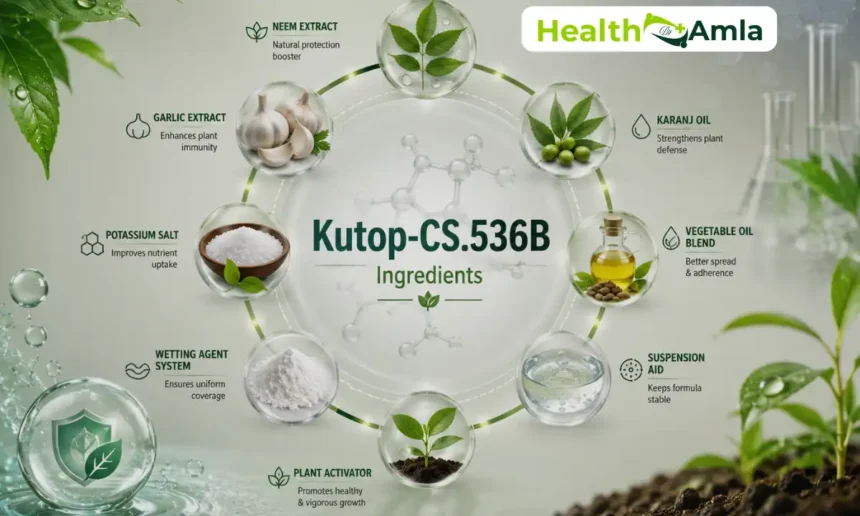
Kutop-CS.536B ingredients are now becoming a matter of increasing concern simply because of the highly technical nature of the name while being talked about skincare products at the same time. Anyone considering applying a cream with such an ingredient in it should first ask the key question regarding its safety and the content of the formulation what exactly does it contain? In the case of a skincare product, its name is not as important as the composition of ingredients. It is your skin that reacts to the humectants, emollients, preservatives, fragrances, active ingredients, etc., which are included in the formula.
The situation is complicated by the fact that you can come across discussions of this term on different websites both from the perspective of a technical or system style name and from that of a skincare product which should be applied to the skin. This fact leads to confusion, which is the reason why you need to be sure about the list of ingredients in such a formulation in order to be sure about the safety of its use.
What Is Kutop-CS.536B?
Kutop-CS.536B seems to be a product name for some kind of cream, topical agent, or coded formula for skin care which people search on the Internet. Nevertheless, it cannot be treated as a common ingredient name such as niacinamide, hyaluronic acid, glycerin, or salicylic acid. Rather, it seems to be some kind of code, internal formula name, or product name for cream.
This is why it is necessary to refrain from any assumptions about the purpose of the product based on its name only. In case the product is a cream, the best way to find out what it is for is to look at the list of ingredients included into the product. Without it, it is impossible to say what the cream really is – moisturizer, medicated cream, anti-irritation or skin barrier cream.
Kutop-CS.536B Ingredients Overview
| Feature | Details |
|---|---|
| Product Name | Kutop-CS.536B |
| Likely Type | Cream / topical skincare formula |
| Main Concern | What ingredients are inside it |
| Public Ingredient Transparency | Limited |
| May Contain | Moisturizers, stabilizers, preservatives, skin-conditioning agents |
| Suitable for Sensitive Skin? | Depends on the full formula |
| Best Before Use | Read label and patch test |
| Risk of Unknown Formula | Moderate if ingredients are not clearly listed |
| Ideal Consumer Action | Check the packaging for the real ingredient list |
| Recommended Use Approach | Start with a small test area first |
First, What Exactly Are Kutop-CS.536B Ingredients?
When people search for Kutop-CS.536B ingredients, they are usually trying to find out whether the cream is safe, effective, and suitable for their skin type. Since the product name does not explain the formula clearly, the word “ingredients” becomes the most important part of the discussion.
In a skincare cream, ingredients are generally divided into two groups:
1. Active Ingredients
These are the ingredients that do the main work in the formula. If the cream is meant to reduce irritation, fight fungal issues, soften rough skin, or calm inflammation, the active ingredient is usually responsible for that result.
2. Base or Support Ingredients
These ingredients help create the cream itself. They improve texture, hold water and oil together, preserve the formula, keep the product stable, and help it spread smoothly on the skin. Even if they are not “active” in a treatment sense, they are still very important for how the cream performs.
So when looking at Kutop-CS.536B ingredients, you should care about both the treatment ingredient and the support ingredients.
Why Ingredient Transparency Matters
One of the biggest problems with products that use coded or unusual names is that consumers may focus too much on the branding and not enough on the formula. But in skincare, ingredient transparency matters more than product naming.
If Kutop-CS.536B is a real cream being applied to the skin, users should know:
- what the main active ingredient is
- whether it contains fragrance
- whether it includes preservatives that may irritate sensitive skin
- whether it contains strong acids or alcohols
- whether it is meant for dry skin, fungal issues, irritation, or everyday hydration
- whether it is safe for the face or only for certain body areas
Without this information, users are applying a formula without understanding how it may affect their skin.
Common Ingredients That May Be Found in a Cream Like Kutop-CS.536B
Although the exact Kutop-CS.536B formula is not clearly published in a standard skincare database, creams of this type usually contain a combination of moisturizing, stabilizing, and protective ingredients. Below are the most common categories.
Humectants
Humectants draw moisture and help to maintain moisture levels in the skin. Humectants are usually among the most crucial components of the cream since they pull moisture into the upper layer of the skin, thereby reducing dryness. In case Kutop-CS.536B is a soothing or moisturizing cream, then humectants like glycerin, propylene glycol, sodium PCA, or hyaluronic acid are included. These are commonly included to enhance skin smoothness and softness upon application.
Emollients
Emollients are used to reduce the roughness of the skin and add more feel to the cream. These additives increase the slipperiness of the product and ensure that there is no tightness or flakiness on the skin. Cetyl alcohol, stearyl alcohol, squalane, and caprylic/capric triglycerides are examples of emollients. In the case of Kutop-CS.536B, which is meant for dry skin, emollients may be present.
Ingredients that Create an Occlusive Layer
The occlusive ingredient creates a thin layer on the skin, which helps to stop moisture loss. The occlusive ingredient is particularly helpful when it comes to creams for use by people with extremely dry skin, or in winter conditions, and overnight applications. Petrolatum, dimethicone, and mineral oils are common ingredients used to create an occlusive layer. For Kutop-CS.536B, if the intention is to keep skin hydrated, then these ingredients can be key.
Emulsifiers and Texture Agents
Since the composition of the cream is such that it contains oil and water, the cream requires emulsifiers for its stability. Emulsifiers prevent the cream from breaking apart and allow it to retain a smooth consistency. These are glyceryl stearate, polysorbates, and lecithin. Texture agents can also be included in order to make the cream feel light, luxurious, or soft.
Preservatives
Preservatives are necessary in that they assist in preventing bacteria and molds within the product. A good product may be harmful even if it is not adequately preserved. Preservatives may range from phenoxyethanol, sodium benzoate, potassium sorbate or any other stabilization system. If Kutop-CS.536B is a cream that has been stored for a period of time, it definitely uses preservatives.
Scented or Sensory Ingredients
Sometimes creams use fragrances in order to increase their scent appeal. However, fragrance is not always good for skin because it can irritate reactive or allergic skin. This means that if Kutop-CS.536B cream contains any scent, people with eczema, rosacea or other conditions associated with broken skin barrier need to be very careful about using it.
Your Skin Cares Not About Buzzwords
And that’s one of the main considerations in regard to the ingredients in the Kutop-CS.536B formula. It doesn’t matter how scientific or high-tech the name of a product sounds; your skin reacts not to the buzzword or code, but only to the ingredients, their concentration, and formula quality. So a cream with an obscure name does not necessarily work better than a basic moisturizing cream without the name at all. In fact, a basic cream that contains glycerin, ceramides, dimethicone, and panthenol is probably more helpful for your skin than a cream with a strange name and hidden ingredients.
So if you are trying to decide whether Kutop-CS.536B is worth using, ask these questions:
- Does the label show the full ingredient list?
- Does it tell you what the cream is supposed to do?
- Does it explain the active ingredient?
- Does it contain known irritants?
- Is it suitable for your skin type?
Those answers matter more than the name itself.
The Risk of Unknown Compounds
The biggest concern with a product like Kutop-CS.536B is the risk that the formula may not be clearly explained. Unknown compounds are not automatically dangerous, but they do increase uncertainty. If the label uses unusual names, coded ingredients, or vague descriptions without proper explanation, you may not know what you are putting on your skin.
This creates several possible risks:
Hidden Irritants
The cream may contain fragrance, strong preservatives, or alcohol-based ingredients that sensitive skin cannot tolerate.
Wrong Product for the Wrong Problem
If the cream is not clearly labeled, someone may use it for acne, dryness, rash, or fungal issues without knowing whether it is designed for that purpose.
Possible Allergic Reactions
People with a history of contact dermatitis, eczema, or cosmetic allergies may react badly to ingredients that are not clearly disclosed or understood.
Mixing Problems
If Kutop-CS.536B contains strong actives and you are already using acids, retinoids, or medicated creams, the combination may cause redness, peeling, or burning.
This does not mean the product is unsafe by default. It simply means caution is important when ingredient transparency is limited.
How to Read a Kutop-CS.536B Ingredient Label
If you have the actual Kutop-CS.536B product in your hand, the best thing you can do is read the ingredient label carefully. Here is how to do that in a smart way.
Check the First 5–10 Ingredients
These usually make up most of the cream. If you see water, glycerin, fatty alcohols, dimethicone, or common moisturizers, the cream is probably built around hydration and texture support. If you see a treatment ingredient high on the list, it may be more medicinal or targeted.
Look for the Active Ingredient
If the product claims to treat a skin issue, there should be a clear active ingredient or at least a highlighted functional compound. If the product makes big claims but does not explain what ingredient is responsible, that is a warning sign.
Watch for Fragrance
If your skin is sensitive, reactive, or acne-prone, fragrance can be a problem. Search the list for words like fragrance, parfum, or scented essential oils.
Identify Moisturizers and Barrier Helpers
Look for glycerin, panthenol, ceramides, squalane, allantoin, or dimethicone. These are usually signs that the cream is trying to support hydration and the skin barrier.
Look for Possible Irritants
Strong alcohols, heavily fragranced oils, and certain preservatives may cause issues for some users. If you know your skin reacts to a particular ingredient, avoid formulas that contain it.
Is Kutop-CS.536B Suitable for Sensitive Skin?
Perhaps it could be, but only when we know the true composition. In order to be considered good for sensitive skin, a cream needs to exclude any irritants from its composition and include only safe substances. The perfect choice of a cream for such skin would be one with ingredients, such as glycerin, panthenol, ceramides, oats extract, or dimethicone, without irritating perfumes or fragrances. Since Kutop-CS.536B is not a widely known cream, those who have sensitive skin must not apply it without checking first.
Also Read About: Vellozgalgoen, Meaning, Origins, Features, Applications, and Future Potential
Simple Patch Test Method
- Apply a small amount behind the ear or on the inner forearm.
- Leave it for 24–48 hours.
- Watch for itching, burning, redness, swelling, or bumps.
- If no reaction appears, try a small amount on the intended area.
Best Practices Before Using Kutop-CS.536B
If you are planning to use Kutop-CS.536B, a careful approach is better than a rushed one. Follow these simple steps:
- Read the full ingredient list before use
- Patch test on a small area first
- Avoid applying it to broken or highly inflamed skin unless advised by a doctor
- Do not combine it immediately with strong acids, retinoids, or peeling products if the formula is unclear
- Stop use if you feel burning, stinging, or swelling
- Store it properly in a cool, dry place
- Ask a dermatologist if you have eczema, rosacea, fungal acne, or a history of skin allergies
These steps can help reduce the risk of irritation and help you understand whether the cream is suitable for your skin.
Ingredients in a Typical Cream Base
In order to understand the composition of Kutop-CS.536B better, it is useful to know what a typical cream base would consist of. The study of the composition of creams and drug creams suggests that the basis of creams is often a mixture of oil phase components, water phase humectants, emulsifiers, and stabilizing agents. Examples of ingredients of topical creams include, for example, sesame oil, Aloe Vera gel, soy lecithin, propylene glycol, glycerol, and emulsifiers. Typical ingredients of drug creams include cetyl alcohol, stearyl alcohol, propylene glycol, water, polysorbates, and sorbitan monostearate. It means that even if the composition of Kutop-CS.536B is unknown, one can still evaluate whether its ingredients look like a typical composition of a cream or a medicated cream.
Red Flags to Watch For
There are a few warning signs you should not ignore if you are evaluating Kutop-CS.536B ingredients.
No Full Ingredient List
If the product does not show a proper ingredient list anywhere, that is a serious issue.
Big Claims Without Clear Formula
If the cream promises to fix multiple skin concerns but does not explain the active ingredient, be careful.
Too Much Technical Language
A scientific-sounding name is not proof of quality. The label still needs to be understandable.
No Brand Information
If you cannot find the manufacturer, product source, or support details, it becomes harder to trust the formula.
Conclusion
The ingredients of the Kutop-CS.536B cream are important to know since the brand name does not give clear information about its components and mode of action. When this product is used for skincare purposes, the most important thing is the ingredient list rather than the branded coding. As all creams do, it may consist of moisturizers, emollients, preservatives, stabilizers and treatment components, yet without a clear label, the usage of any assumptions would be inappropriate.
The simplest way to go is always skin-friendly; therefore, the best solution is that the skin does not mind the marketing efforts. It only cares about the content of the product that will be applied onto it. Thus, when planning to use the Kutop-CS.536B cream, it is better to carefully read the ingredient list and patch-test the product before the application.
FAQs
What are Kutop-CS.536B ingredients?
Kutop-CS.536B ingredients refer to the compounds used in the cream or topical formula marketed under that name. The exact formula should be confirmed from the product’s label.
Is Kutop-CS.536B a moisturizer or a medicated cream?
It is not fully clear from the name alone. It may be a moisturizing cream, a treatment product, or a coded skincare formula depending on the actual packaging.
Can Kutop-CS.536B contain irritating ingredients?
Yes, like any cream, it may contain fragrance, preservatives, or active compounds that could irritate sensitive skin if the formula is not suitable.
Should I patch test Kutop-CS.536B before using it?
Yes. If the ingredient list is unfamiliar or unclear, a patch test is strongly recommended before regular use.
What matters more the product name or the ingredient list?
The ingredient list matters much more. Your skin reacts to the formula, not the branding.
Also Read About: Poxkurkmoz795, Meaning, Features, Applications, Benefits, and Future Potential